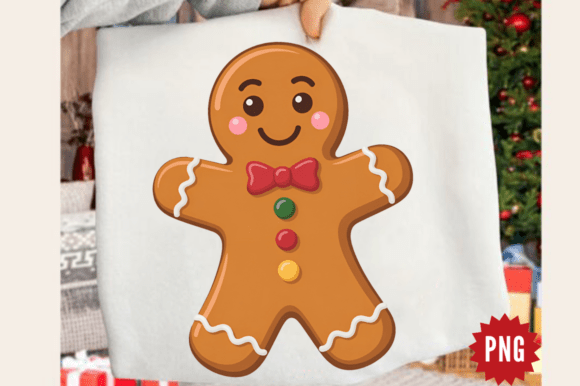
Christmas Gingerbread Cookie PNG File
As a designer who spends half my life staring at stitch density charts and the other half worrying about thread tension, I don’t just look at a design file; I look at how it will survive the hoop. When I first pulled up the Christmas Gingerbread Cookie PNG File, my initial reaction wasn’t about the holiday cheer—though that is certainly present—but rather about its structural integrity as an embroidery asset. This isn’t just a cute illustration; it’s a functional piece of visual communication that needs to translate from a flat digital screen into three-dimensional thread without losing its soul.
The mood of this design is warm, nostalgic, and undeniably festive. It captures the essence of holiday baking without being overly cluttered. For small business owners and Etsy sellers, this distinction is critical. You want something that feels handmade and approachable, not mass-produced or overly complex. The shape is classic, recognizable, and lends itself naturally to a variety of products. But does it work in practice? Let’s break down how this machine embroidery design performs when you move it from your monitor to your embroidery machine.
First Impressions and Visual Personality
The visual personality of the Christmas Gingerbread Cookie PNG File is defined by its clean lines and playful charm. In the world of embroidery files, simplicity is often the hardest thing to achieve because you have to balance detail with legibility. This design strikes that balance well. It doesn’t rely on tiny, intricate details that might get lost in the fabric weave. Instead, it uses bold shapes and clear contours that are forgiving during the digitizing process.
When I evaluated the layout, I noticed that the central focus is strong. This makes it an excellent candidate for a chest placement on custom apparel or a centered motif on a tote bag design. The theme evokes comfort and tradition, which resonates deeply with customers looking for personalized gifts or holiday embroidery items. It feels like a design that belongs in a cozy kitchen or a boutique gift shop, rather than a high-fashion runway. That specificity helps you target your marketing more effectively.
Real-World Application: From Screen to Stitch
I recently tested a similar gingerbread motif on a heavy cotton canvas tote bag, and the results were telling. The Christmas Gingerbread Cookie PNG File translates beautifully to sturdy fabrics. The fill stitch areas hold their shape well, creating a textured surface that mimics the sugary coating of a real cookie. However, the success of this project depended heavily on the choice of thread colors and the stabilizer used.
For sweatshirt embroidery, this design shines. The soft fleece provides a perfect backdrop for the warm tones of the gingerbread. When paired with contrasting thread colors, such as a deep brown outline against a lighter fill, the design pops without overwhelming the garment. It also works surprisingly well on baby clothes. There is something inherently sweet about a gingerbread motif on a onesie or a burp cloth, making it a top contender for baby embroidery projects. Parents love buying these items as personalized gifts for holiday parties or nursery decor.
In terms of commercial embroidery, versatility is key. This design can be adapted for aprons, kitchen towels, and even pillow covers. The rectangular aspect ratio of many gingerbread illustrations allows for easy integration into vertical layouts, which is ideal for tea towels. When you create printable mockups for your Etsy listings, this design offers high visual appeal because it is instantly recognizable. Customers don’t need to think hard to understand what they are buying; the emotional connection is immediate.
Where Caution Is Required
No design is perfect for every situation, and as an experienced reviewer, I must highlight where this digital embroidery file might struggle. First, consider the hoop size. If you attempt to digitize this design too small, you risk losing definition. Small hoops often compress stitches, causing the satin stitch edges to become jagged or the fill stitch areas to pucker. Always test the design at its smallest intended size on scrap fabric before committing to a final product.
Fabric texture is another major factor. While this design works well on smooth cottons and polyesters, it may not perform as expected on highly textured fabrics like bouclé or thick terry cloth. The needle penetration required for dense stitch density areas can be difficult on rough weaves, leading to skipped stitches or thread breaks. Similarly, stretchy fabrics require careful stabilization. Without proper stabilizer support, the tension of the embroidery can distort the fabric, warping the gingerbread shape and ruining the professional finish.
Detailed corners and tiny lettering should be approached with caution. If the original Illustrations include fine script or intricate icing details, ensure those elements are large enough to be stitched clearly. Tiny details often merge together in embroidery, turning into muddy blobs rather than crisp lines. For embroidered patch applications, keep the design simple and robust. Curved surfaces, like caps or hats, also demand careful testing. The curvature can stretch the design visually, so you may need to adjust the digitizing to compensate for the distortion.
Practical Designer Notes for Success
To get the best result from the Christmas Gingerbread Cookie PNG File, follow these practical steps. Always run a test stitch-out on the actual fabric you plan to use. This allows you to check thread color contrast and inspect the overall balance. A common mistake is assuming that a design looks good in black and white on a screen but fails in color. Convert your mockup to grayscale to ensure the light and dark areas have sufficient separation.
Choose your thread colors wisely. Gingerbread designs typically benefit from warm browns, creams, and reds. Avoid neon or overly bright threads, as they can clash with the rustic aesthetic. Use a cut-away stabilizer for knit fabrics and tear-away for wovens, depending on the weight of the material. Inspect the stitch density in your digitizing software. If the density is too high, the fabric may become stiff and uncomfortable, especially for wearable items like custom apparel.
Finally, confirm licensing before selling finished items. Many design assets come with specific terms regarding commercial use. Ensure you have the right to sell products made from this embroidery project. Clear licensing protects your craft business and builds trust with your customers. By paying attention to these details, you transform a simple PNG into a high-quality finished product that reflects professionalism and care.
Final Verdict
The Christmas Gingerbread Cookie PNG File is a solid addition to any designer’s library. It offers a blend of seasonal charm and practical usability that appeals to a wide audience. Whether you are creating handmade products for a craft fair or stocking your online store, this design provides a reliable foundation for successful small shop product lines. Its ability to adapt to various materials and applications makes it a versatile tool for creative entrepreneurs. Just remember to respect the limits of the medium, test thoroughly, and let the quality of your stitching speak for itself.